Your language
Training explained in a language you actually think in.
Not knowing what an exercise is called, or what the instruction means, is a real barrier — not a small one. Stadika explains exercises in Swedish, English and Persian, and the coach answers in whichever you choose.
Three settings
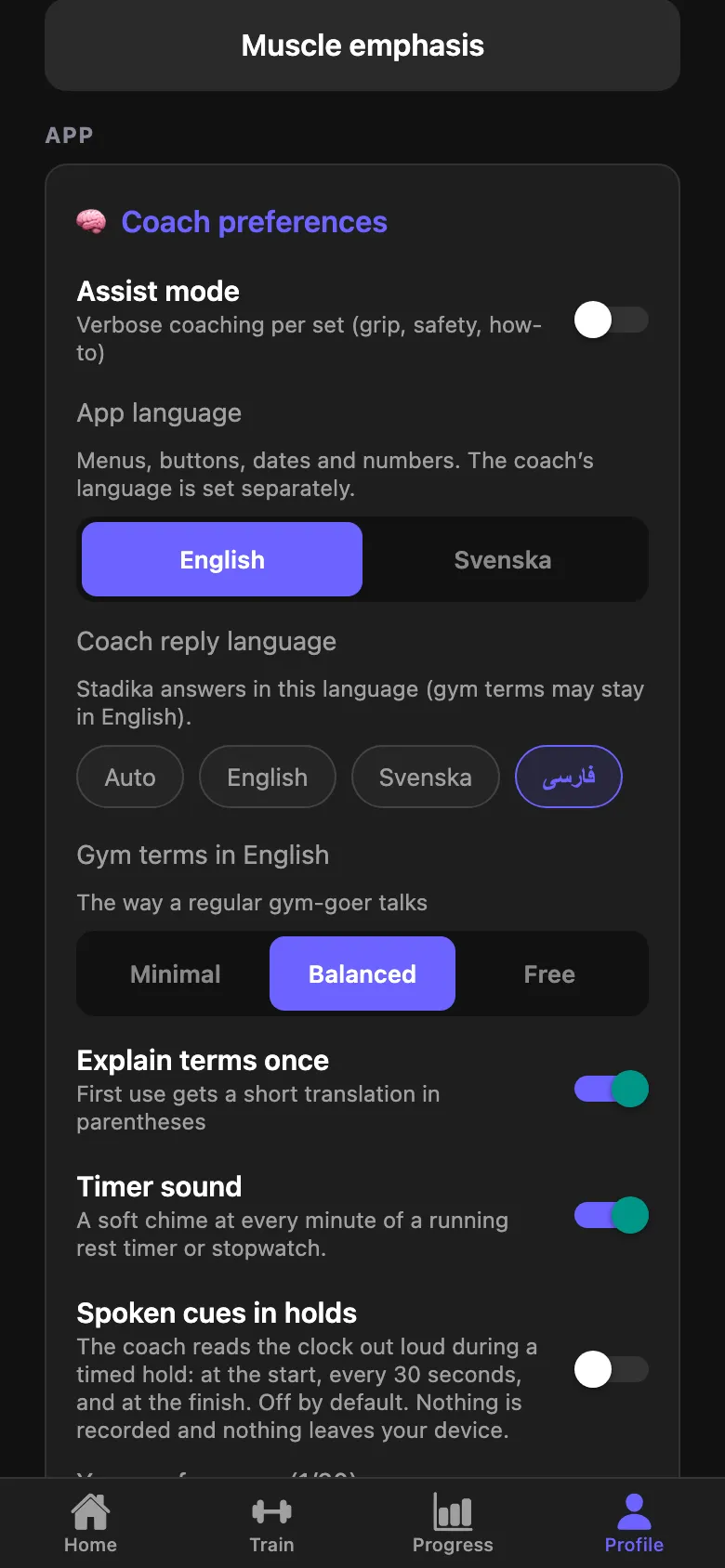
The app’s language and the coach’s language are separate choices.
Menus, buttons and dates are in Swedish and English. The coach also answers in Persian. You set them independently and can change either at any time.
The third setting is about gym vocabulary: should exercises keep the names people actually use in the gym, or be translated? Face pull is face pull for most people, so it can stay that way.
So: menus in Swedish or English, the conversation in your own language — much the way you already use most apps.
The library
The same entry — not three different texts.
155 exercises, 28 muscles and 55 machines. Every exercise has the same structure in every language: how to do it, common mistakes, safety notes and which muscles work. One record in one library, not a machine-translated copy that drifts out of date.
In practice
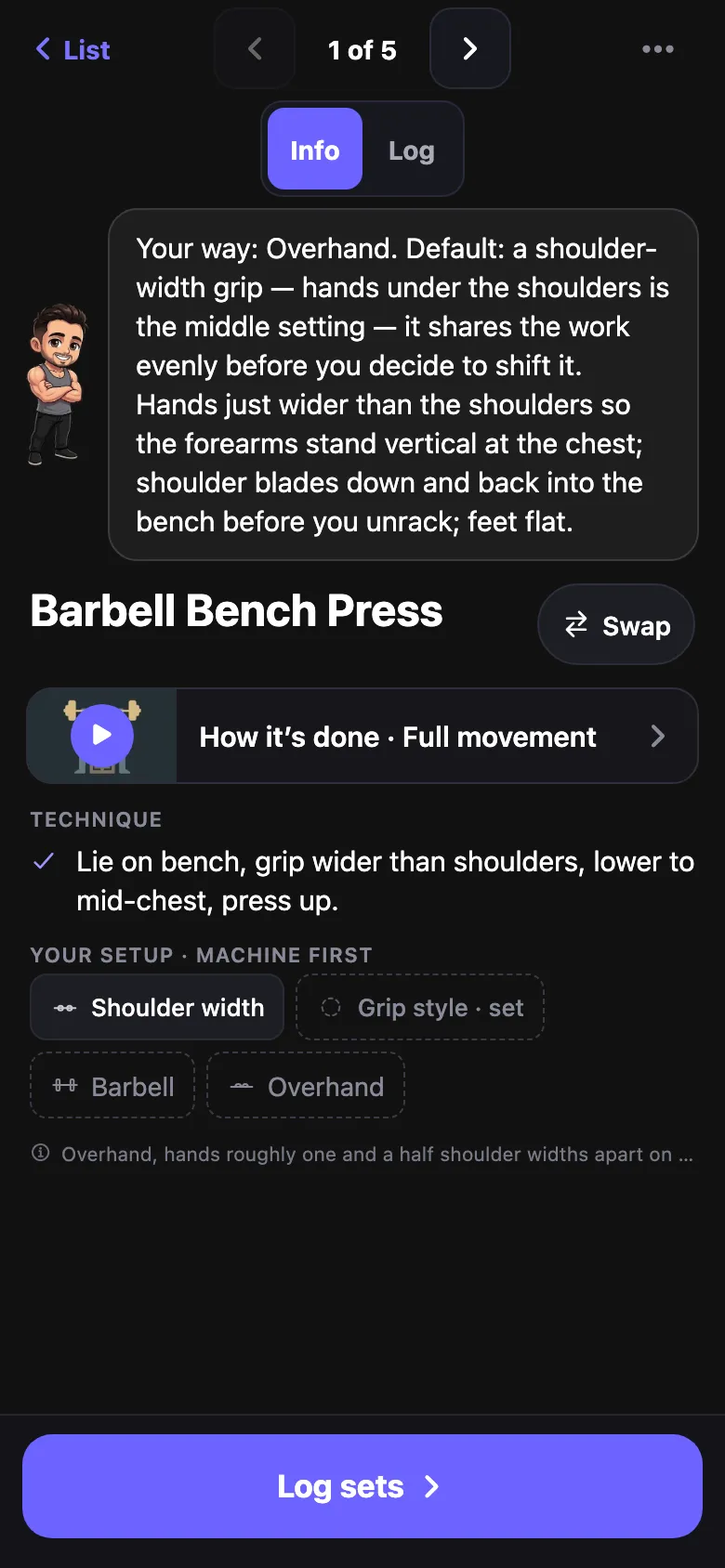
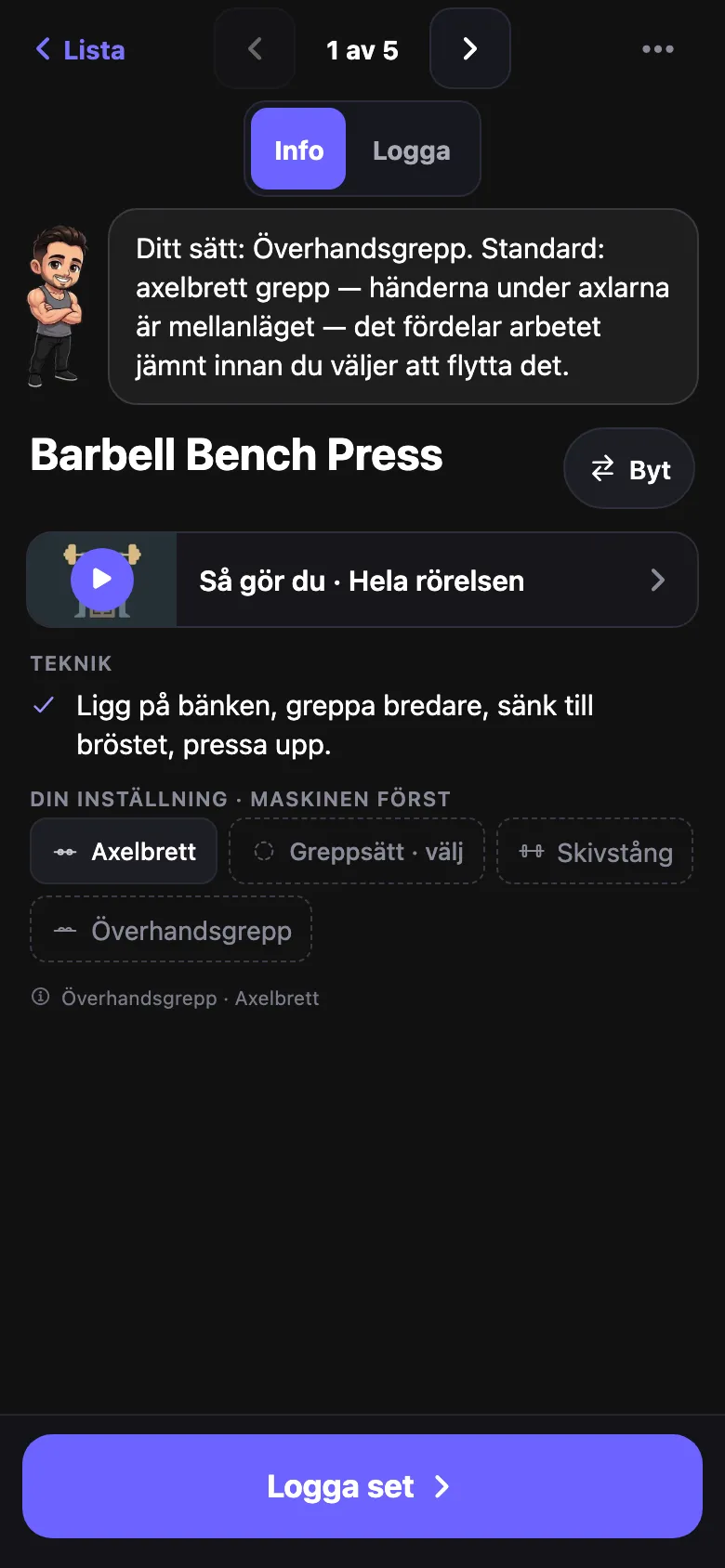
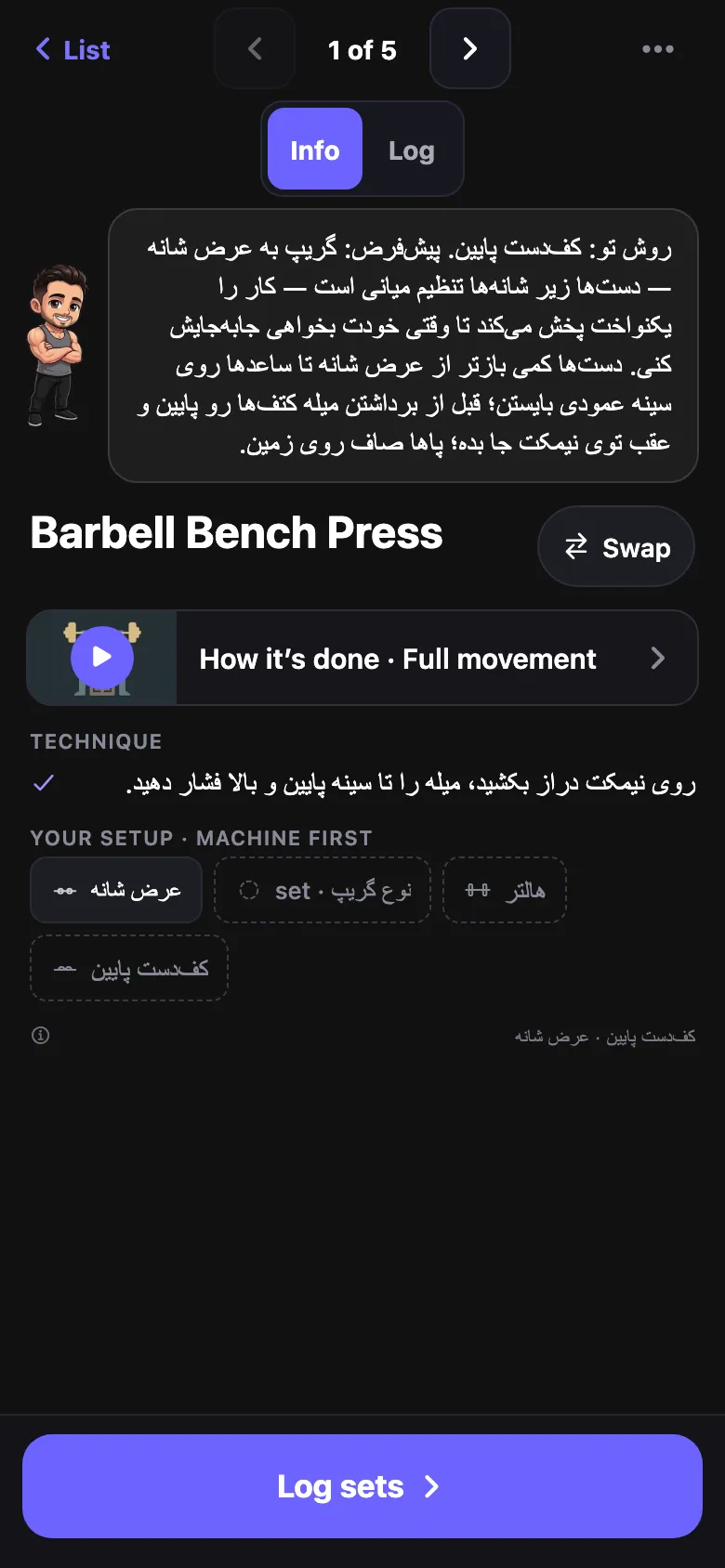
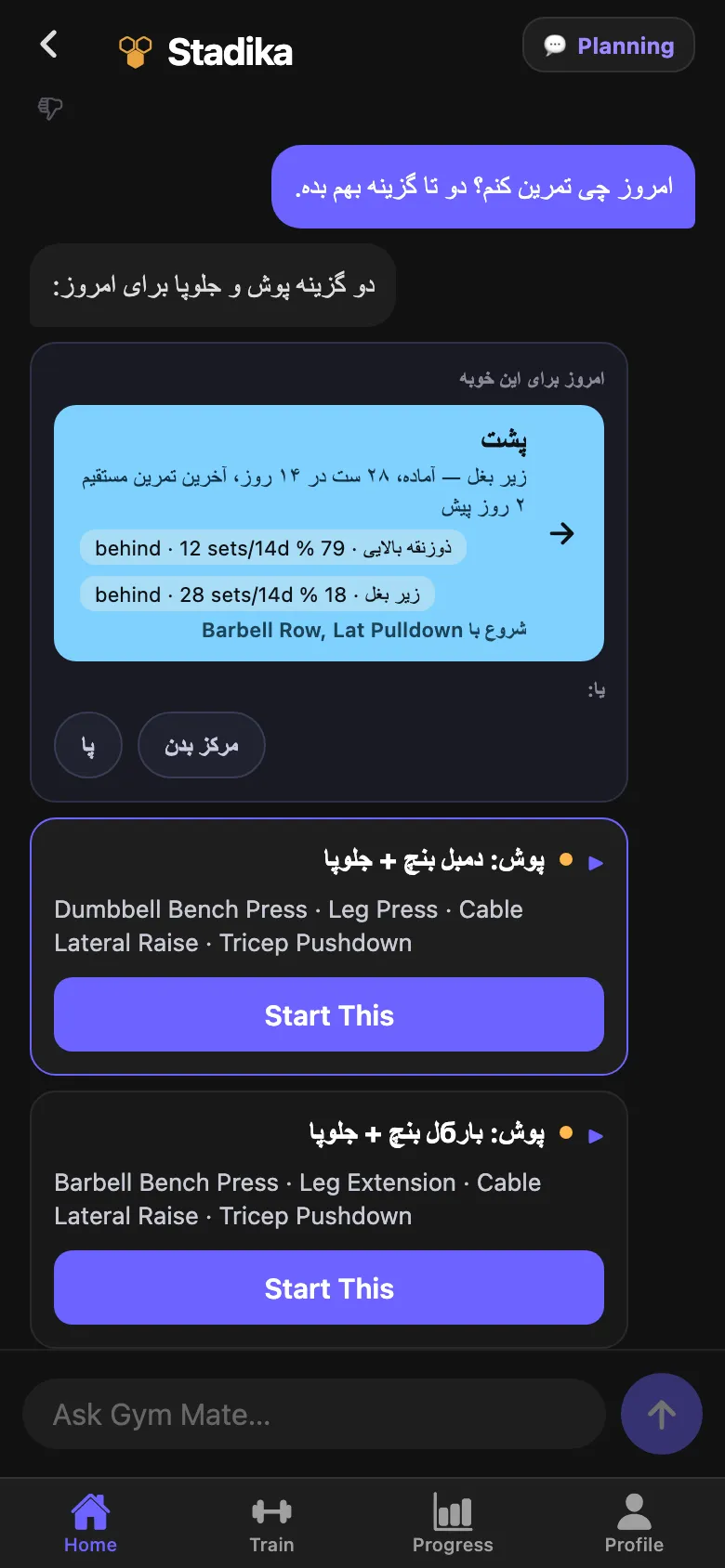
English menu, Persian conversation, English exercise names.
All in one frame. The question is asked in Persian, the answer comes back in Persian, exercise names stay in English because that is how they are said in the gym — and the buttons stay in English, the language the app is set to.
None of the Swedish training apps go beyond Swedish and English.
Why it is built this way
The allowance is for everyone. It is not used by everyone.
16% of employees don't expect to use their wellness allowance at all, and 41% do not use all of it (Sifo for Epassi, 2022). Rarely because the money is missing — it is there, and it disappears on 31 December.
We believe it is more often because the gym feels like someone else’s place, or because the instructions are in a language you read slowly. Both barriers can be removed, and few have bothered with the second one.